

Neocaridina "Golden Extreme"
Neocaridina "Golden Extreme"
Buy more, save more
Buy more, save more
Discounts are calculated automatically.
Couldn't load pickup availability
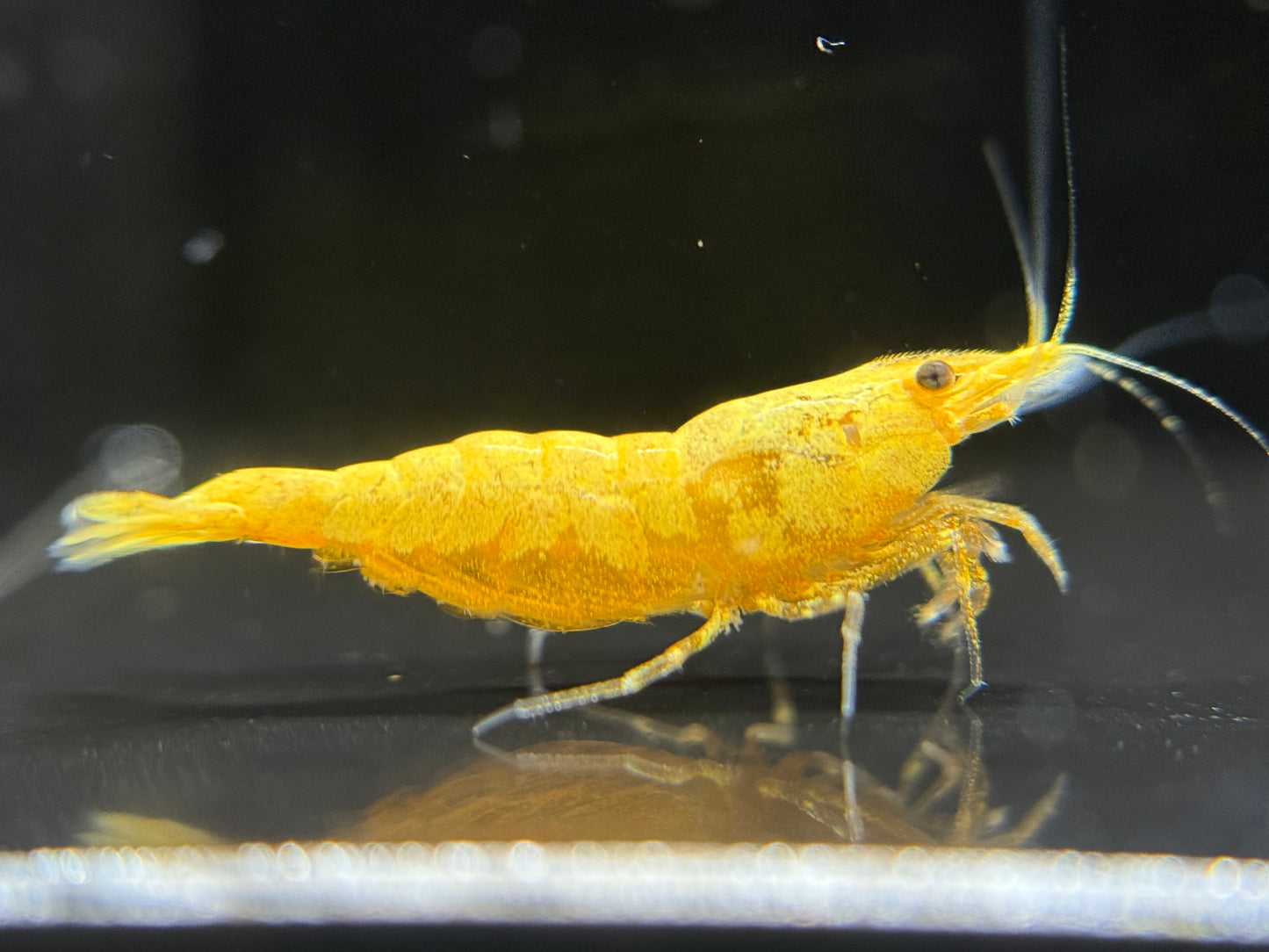
Neocaridina "Golden Extreme", similar to breeding lines such as "Jinsha" or "Crested Cream", is characterized by an exceptionally broad dorsal stripe. As the distinctions between these newer breeding lines are not clearly defined, we offer this line under the name by which it was originally introduced to us.
The dorsal stripe extends across the entire body in females, while in males it is generally somewhat wider than that of the Neocaridina Yellow Neonstripe. The body coloration is yellowish, occasionally displaying a subtle orange hue.
How stable is this line? We are currently breeding this line ourselves, and the offspring look very promising. As some of the shrimp currently offered may still be imported animals, it is likely that a certain amount of selective breeding will be required in future generations.
Size at sale: All shrimp offered are fully grown and sexually mature. When selecting animals for shipment, we ensure that at least 50% of the shrimp are females.
General care and breeding information: Like all dwarf shrimp of the genus Neocaridina, these animals are highly adaptable and can usually be kept without difficulty in tap water (18–26 °C). In our facility, the tap water parameters are: pH 7.6, GH 10, KH 9, conductivity 600 µS, and 22 °C. The shrimp feed on standard fish food, algae growth, as well as decaying plant and animal matter. This makes them excellent scavengers that contribute to the biological balance of the aquarium. Keeping them together with small to medium-sized aquarium fish can work well, although sufficient hiding places such as mosses and driftwood are recommended. Under optimal conditions, the shrimp reproduce readily and quickly develop into vibrant colonies.
Share
Video
Subscribe to our emails
Be the first to know about new collections and exclusive offers.